
Mandal Is A Serious Comedian

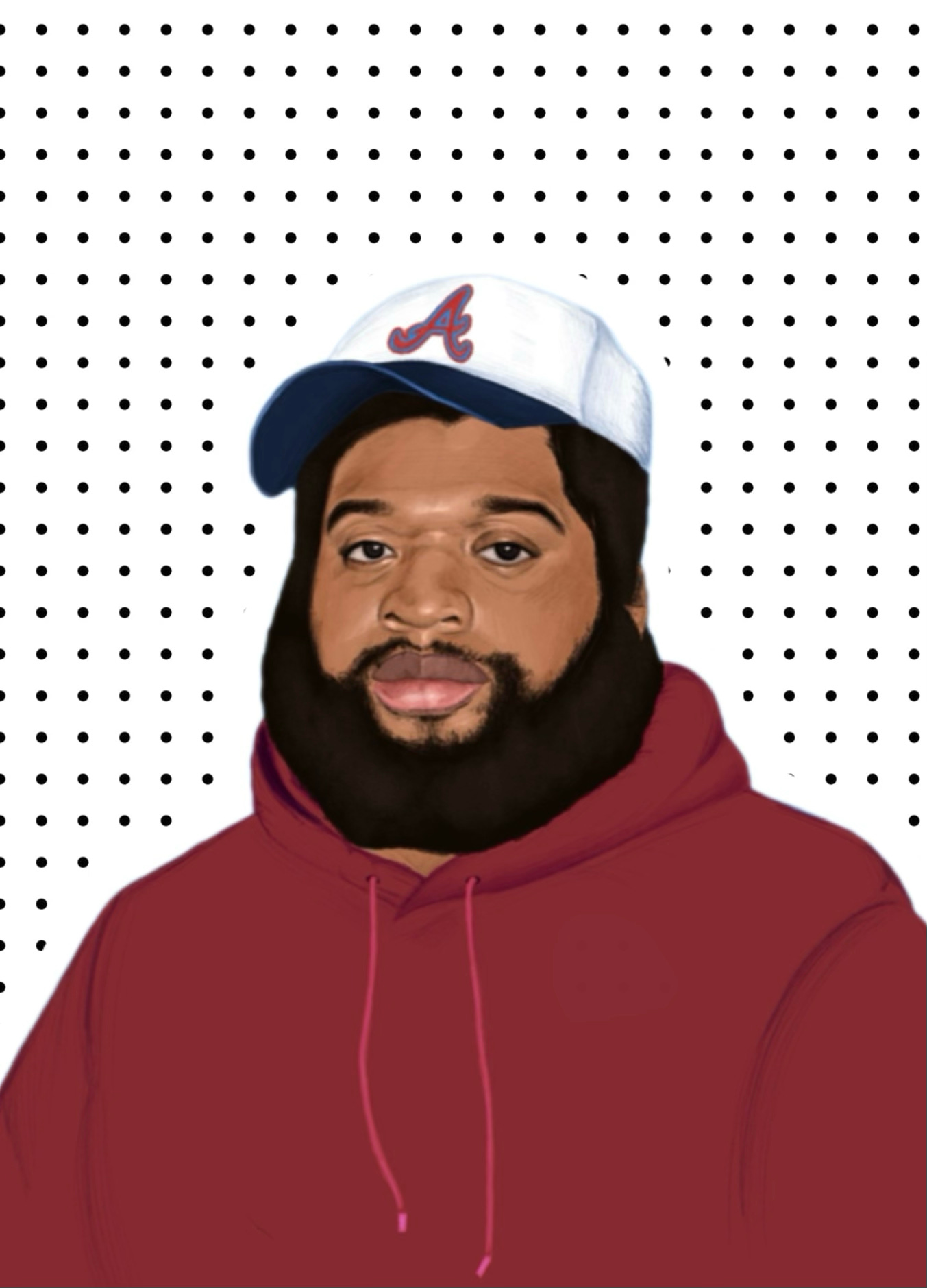
Near the end of our conversation, comedian Mandal laments that when he was younger he “really wanted to be a serious individual.” He pined to “be smart,” or “some type of leader,” always finding himself pursuing a plan or dream of his that he could never, for some reason, find the follow-through to actually accomplish—be it in the world of corporate accounting, or running for student president (and winning) in high school. He had to accept the fact, he says, that he’s just “silly.” Learning to embrace that has been his life’s journey, in a way. However, I’d argue that the two qualities—serious and silly—are not only deeply reconcilable, but inseparable, and the Atlanta-born humorist is living, thriving proof.
Let us take, for a moment, the litany of impressive credits to his name. He’s the warmup comic for Everybody’s Live with John Mulaney, and has performed his sprawling, hilarious, and sprightly sets in coveted spots on The Tonight Show Starring Jimmy Fallon, Netflix is a Joke, and Don’t Tell Comedy. He’s also produced a number of animated programming for Adult Swim—writing and starring in Mandal Takes an L, as well as co-creating, along with Zae Jordan and Javier Williams, the viral series Lil Daddy. None of that is mentioning that he’s adored by the world of hip-hop, too—lending comedic lines to two major rap albums this year: Zelooperz’ Dali Ain’t Dead and Earl Sweatshirt’s Live Laugh Love. Vulture naming him, in 2024, a “Comedian You Should and Will Know,” was so apt that the honor now feels sterile. Mandal has not, as he’d suggest about his past, been subsumed by his outsized ambitions, but instead, outgrown them.
But put all that aside, and what I have to say next is as cliché as you’d probably expect—if only it weren’t true. That is, in the best way, there’s no impressions of any of that when you speak with him (except for how funny he is). The comedian is strikingly humble, warm, and human. And it was a refreshing conversation, as he walked me through his upbringing, the influence of a certain yellow fry-cook, and the mental dangers of comedy. At a time when this career and industry feels increasingly uncertain, Mandal is flat-footed and focused on what’s actually relevant: the cultivation of an artistic spirit, and an everyday commitment to simply trying to be a good, kind person.
The more I do these interviews, the more I’m reminded why those who end up “making it,” make it. They’re uninterested in—bored by, even—the empty pursuit of “fame” that commonly permeate the epicenters they reside in (Mandal is currently based in Los Angeles) as well as the symptoms inherent: envy, bitterness, or self-doubt, for example. They’re concerned, instead, with questions of process and inspiration. As opposed to fame, their sights are set on craft. And where others are repulsed by the struggle inherent to the art-making process, Mandal—like all artists who approach greatness—can’t even seem to begin to imagine a way of living without it.
This interview has been edited and condensed for length and clarity.
You’re from Atlanta, which you’ve called “the best city in the world.” I’m also from there, and I think it’s such a unique and specific place. So many characters, colors, contradictions—which I guess you could say about any city. But what makes Atlanta special, I think, is that this is all grounded by such a strong Blackness. It kind of feels like every type of Black person exists there—the entire spectrum. How do you think growing up there has informed your comedic sensibilities?
I agree with what you saying, bro. I feel like Atlanta, because it’s a Black universe, you get to be this weird niche, where I feel like I kind of always had an odd sense of humor. But like, I don’t want to give myself too much credit. You know people be like, “I’m weirddd. I’m twisteddd.” You know what I’m saying? But I feel like I always—I wouldn’t say different—but I always was just a little alternative in what I thought was funny. And I think that only exists in places where the universe is Black. So then, now we kind of all have our own little niches.
I feel like it’s a thing that some people have a hard time conceptualizing of: like, everybody in the place was Black. So you didn’t really have a perspective of anything beyond that. You filled your personalities, relationships, whatever, based on whatever niche thing you got into. I think it allowed the space for me to have the type of comedy I have.
Yeah, for sure. I felt like that, too. College is my first time ever going to a school that’s not, like, over 90% Black. And now I feel like it’s the first time I’m ever feeling that pressure. Like, feeling like there’s “types” of Blackness. And that you have to fit into a certain one—I never even noticed. When it was time to apply to colleges and people were like, “Do you want to go to a majority Black school?” or whatever, I didn’t even know that was, like, a benefit. Because that was just my reality. You know?
Yeah, absolutely. I feel like when I was applying to school—I went to UGA. I was either gonna go to UGA or Morehouse. But Morehouse was too expensive. But I didn’t perceive how different it was going to be being at UGA. Like they was like, “Oh, you know UGA a white school?” I’m like, oh, it’s gonna be some white people, but I imagine it’s just gonna be...
Right.
And we had our own good community of Black people, but I didn’t think it was gonna be like, Oh. This is an entirely different world from what I’m used to. You know what I’m saying?
Yeah, I was just about to ask that. What was it like going to a PWI from an Atlanta, majority-Black upbringing?
Man, honestly bro, we had such a tight-knit community of Black people that it still felt like home, but it just felt like my world was smaller. That’s all. Like, it was so many people from Atlanta there so it was still cool. We still had events and stuff. It just wasn’t a whole universe. It was our little bubble. It wasn’t too bad.
Were you in the Black Student Union?
I was president of this organization called Black Male Leadership Society. We did a lot of stuff. And then I was involved in some of the campus events. I was really bad at it though, bro. I was a really bad leader altogether. But it was fun just being apart of that stuff, and that kind of helped me have a sense of community.
That’s interesting hearing you say you feel like you were such a bad leader, because I remember hearing you [in an interview] talk about when you were student body president…
Woooo, ay you did some research! I’ve never been a person that somebody felt like they needed to do research on. This is a cool moment. I appreciate that.
When I was in high school, bro. We had this race for president. I wasn’t in student body my whole time in high school until student year. And then, I was running for president, and I had T-shirts, and back then I wasn’t Mandal. I was trying to get the nickname going: Dirty. I wanted to be called Dirty. I don’t know why. And then I was telling people we was gonna “dirt the vote.” And dirt was an acronym for determination. intelligence, responsibility, and trustworthiness.
Oh shit.
I made commercials with my homeboy’s little brothers. And then I did the speech, and I was funny. But everybody else in my class, they didn’t vote for me because they knew I was trash. But all the underclassmen voted for me. And then I won. Looking back on it, I slick was the first Trump, bruh. I really won off the ignorance of the people who didn’t know that I was a trash individual.
My high school principal told me to my face that I was the worst president that the school ever had.
Really? Was there, like, an inciting event for that?
I just couldn’t get nothing done. They had a teacher’s appreciation program and it sucked that year because the student body runs that, and I was the president, and I had to get that done. It was bad, man. I really flubbed that.
That’s such an interesting thorough line—this discomfort with leadership. You’ve said before that the career you entered post-grad made you “miserable,” one of which consisted of various accounting and sales positions at logistics and law firms around metro-Atlanta. It’s interesting, though, because you now spoof and play on this kind of career path in your new show, Big Biz. I’d love to hear more about the inspiration behind that show, and how, like there, you use bad or shitty experiences as comedic inspiration.
Dang, bro. This a real interview.
Yeah, so. When I got out of school—it’s a reoccurring thing that I’ve always had, and maybe it’s an ADHD thing. But I’ll have these really vast dreams, but then, for some reason, I can’t deliver on it. When I was in school I was doing marketing and stuff, man. And then when I got out, it was just hard, bro. It was just difficult. Like, I remember it was a thing that made it click that I wasn’t going to be good at my job.
I was working at AT&T. And we all in the thing, and the lady’s like, “Hey, the people who do good in this job—who really excel—they come to work early. They come to work early before they ‘pose to be there, because they excited to work. So, if you somebody who thinks they’re going to be the best salesman we’ve ever had, we come in early!” And then the next day, I was the only one who came on time. I didn’t process that she was telling us, “Hey, don’t come to work early.” I just didn’t have that, you know?
So I feel like a lot of those failures throughout, like me being a person who would be like, okay, I’ma try to do this big program. Or be president of this organization— I always had good intentions. But I just never wasn’t good at getting the things done.
And I feel like comedy is one of the first things where that can kind of help a little. Because you’re talking. So you’re hyperbolizing in a way that instead of just trying to get people to do things, you’re just making people laugh.
But you made a good point about Big Biz. Big Biz was based on some of my experience with industry, and I think my strongest thing I do comedically is being, like, a person who is just saying a bunch of nonsense. Like, a person who’s attempting to seem like they know something, and they just ignorant. But they don’t realize how ignorant they sound. I feel like that was me when I was younger, and I use that comedically.
You said something similar in another interview. That earlier in your life, “I was a person who wanted to be a serious person, and I just wasn’t.” I see that in what you’ve said about your writing process, which you say is centered around “being silly.” That you feel most comfortable as a comic when you’re embracing that part of you. What does “silly” mean to you? And how naturally does it come to you? Do you ever find yourself doing specific things to try to tap into it?
I think it just comes, bro. When I was younger I really wanted to be a serious individual. Like, I wanted to be some type of leader, or be smart. And I don’t know if it’s a coping mechanism or not, but I feel like now I’m kind of okay with being like, hey. I’m a silly individual, and I like to make stuff that’s funny. I feel like silly became important to me because I realized the things that I enjoyed when I was a kid was always that. And so I feel like it got a place in entertainment. So, for me, it’s like, I’m just carrying on what I liked when I was a kid.
What were some of those things? What were your biggest comedic inspirations?
SpongeBob, bro. That cat SpongeBob.
Ed, Edd, n Eddy. Adult Swim—Boondocks, Squidbillies, the Eric Andre Show, Tim and Eric. Shoot, I mean even when you watching, like, Dragon Ball Z, bro. It’s silly stuff in there. When he go to train with buddy, and buddy tries to make the jokes. It’s a bunch of stuff where I feel like the parts that always made me laugh were absurd. And maybe it’s a level of escapism from whatever, but I always like stuff that’s absurd.
My first emotion when I’m laughing is, “Whaaaat?” I like that. Some people like relatability. They like, “Oh, I identify with that.” And that makes them laugh. But with me, I always been like, “Something very stupid is happening.” Or something does not make sense. And that make me laugh.
I see that for sure. That Nelson Mandela soup joke…
Bruh, sometimes I just get in like a little word association riff. Where I’m just saying some junk, and I say it and like… I thought it was funny, but then when Thebe (rapper Earl Sweatshirt) laughed so loud, I was like, “Okay, this is doing something.”
Who are some of your biggest influences in stand-up specifically?
Hannibal Buress. Hannibal was the first person I seen who was…I don’t know how to say this without it sounding the wrong way. ‘Cause I’m not saying nothings wrong with this, but, Hannibal was the first Black person who I seen who I was like, oh, this cat is off, but he not doing the “fish-out-of-water” thing. And not saying nothings wrong with that, [but] that just wasn’t my experience.
Some people, they were the one whatever of a white community, but you could tell that [Hannibal] grew up in whatever parts people grew up in, but he just somehow was a little odd. And I feel like I identified with that. I remember on that first album, My Name is Hannibal, when he was like how rappers be talking about how the chains be blinding people. And then he do that little act out. When he like, “Oh, I got astigmatism.” That joint—and then of course the pickle juice joke—all that type of stuff I was like oh, this my favorite comic.
And then, I read an article about Hannibal where he mentioned Mitch Hedberg. And I like him, but I can’t write as well as bro. But I like his stuff. I like Dick Gregory. Redd Foxx. Redd Foxx was so cool ‘cause he just had good swag on stage. You know, he taking a sip of the drank, he got the suit on.
Also, too, I was a big fan of Demetri Martin when I was a kid.
Deon Cole. Deon Cole is fye because he was the guy…he kind of let the audience in on the idea of working bits. Where, before, everybody believed we were almost like magicians. Where they didn’t know if it was rehearsed, or they didn’t know if there was, like, a process. But Deon Cole, when he started bringing the pad on the stage, people like, “Oh, this is a thing that he’s crafting.” And then people started to appreciate that crafting.
And then the classics, you know. Of course, Chappelle. Of course, Chris Rock.
You’ve spoken before about the cost of comedy and stand-up. How “as long as you’re doing standup, you’re seeking someone else’s approval,” and how that’s affected your sense of self and value. How are you negotiating that cost these days? As your career grows bigger, but you grow older and more mature, do you think you’re getting better at it? Or worse?
Okay, so I have a theory, bro. And people disagree with me on this a lot. I have a lot of bad opinions. And one of them is: I think that people think that people who are unwell get into stand-up, which is true, but I also think that stand-up makes you unwell.
Here’s what I think. Two things. I think that the amount of dopamine you get from killing a set is not common in people’s lives. That’s the amount of attention you get at graduation, you get at a wedding, you know, maybe you get “Teacher of the Year.” But we get that every day. And so I feel that just like with drugs, you get all those dopamine hits in your head. And it becomes chasing a high. Just like any other drug where your brain isn’t producing it as much as it could, because you’re getting it from this super-surge high. So I think that affects our brains, right?
And I think the second thing it does, because of that, is it kind of asks for approval. Like you’re asking, “Is this funny?” And then, “How is it funny?” You’re kind of asking something out of them with the laugh. Over time, if you do that every night for seven, eight years, it’s gonna affect the other parts of your life. Just like anything. If you on the football field, tackling every night, guess what, bro? When you get up, you you gonna have a little limp to you in your forties.
But to answer your question, what I try to do now is create value outside of the stage. Where I feel like for so much of my young adult life, I was so focused on this thing, because I didn’t have other things. You know, I was in a relationship in my late 20s, but in my early 20s I didn’t have relationships, I was broke, or I didn’t have any accomplishments, so I was like, “Oh, this thing got to work.” So I put all my value into that. So if I did good, I was the coolest person in the world, and if I did bad, I was the worst person in the world, which ain’t true.
And so now I started to be like, okay, well, am I a good son? Am I a good family member? Am I a good community member? Am I nice to people around me? Do people respect me? Do I respect others? And I think that putting more value in that stuff allows for you to deal with the ups and downs of the stage. You know what I’m saying? And you got to do that. Because just being so at the mercy of other people’s opinions…it’s bad for you.
So, I feel like that’s how I try to combat it. But sometimes that don’t work. So, my real answer is: I don’t know.
You write and perform on Lil Daddy, which you’ve helped create with Zae Jordan and Javier Williams. That show and its success, I think, is such a testament to the power of community and creative collaboration. What lessons from that show, and just creating your own stuff in general, would you say you’ve learned?
Writing is hard, bruh. Honestly, it kind of taught me that sometimes I can overthink what is funny. And then the work ethic. Like, I feel like with stand-up, you kind of create your own routine, and how you go about doing it. But then when you working for somebody else, you kind of stepping up to their standard, you know?
The hardest lesson I learned from Lil Daddy, bro, was how to be okay with people not liking something. Most people like Lil Daddy. Most people comment and they like it. But when we did that podcast episode, it was so many people that had these various opinions where I was like, I don’t agree with what they’re saying. And not only do I not agree with what they’re saying, some of the synthesization that they’re saying is not true. Like, their conception of what happened, and what happened is not true. But, it’s art bro. So once you put it out, people are allowed to interact with it whether they like it or not. And I think because stand-up is so based in validity, if you got a joke bombing, you can riff, you can do whatever, you just want ‘em to laugh so bad.
And I felt like Lil Daddy was the first time I had to be secure in what I thought was funny. Where, like, we worked on this for months. We think this is good. We put it out and hope people think it’s good. Rather than getting like an immediate validation.
And what lessons have you learned where you’re not necessarily at the helm of the ship creatively, but working for someone and helping to serve their creative vision? Like on “Everybody’s Live with John Mulaney,” for example?
Being on a show like that, and seeing how everybody was working, kind of made this feel real, bro. I feel like it feels like such a pipe dream, and then it was like, “Oh, this really is a thing you can do as a career and have success in.” And that made me feel good.
And then the second thing I feel like I learned is that you can be an asset to people comedically, and knowing that about yourself can help you work way longer than [just] being obsessed with the thing you want to do.
Like, I’m very silly in a way. And I’m also very Southern. And that’s something that people don’t see as often. And so I can be almost be like a Pokemon for certain projects. I can be put in, and its a unique thing. I feel like “honing your voice,” I always thought was just for the audience, but it’s also for being useful on other people’s projects.
I think this question is personally important to me as someone who is just starting to pursue this: How do you balance how uncertain the industry is right now with trying to remain creatively pure and grounded?
I think you gotta have a level of belief that you gonna be straight. And I think the biggest thing, bro, is I have a firm belief that if you work hard at something long enough, and you’re good at it, and you’re good to it, it will be fine. It may not be fine today. And for me, it may not have been fine for seven, eight years. But eventually it will be.
I think sometimes people’s problems that they think is “outside of themselves,” is really themselves. You know what I’m saying? The industry can weigh back and forth. [But] if you got some heat, you got some heat, bruh.
Mandal’s top 5 Atlanta rap songs:
1. “Ova da Wudz” by Outkast
2. “Vica Versa” by Pastor Troy
3. “24’S” by T.I.
4. “Baby, Baby” by Kilo Alo
5. “Sneakin N Geekin” by Peewee Longway
HM: “Cre-A-Tine” by Cool Breeze; the absence of any Future or Young Thug songs was mentioned, and properly mourned.
Mandal recommends:
- Twizzlers Filled Twists
- The Worm “Honestly, I’m tryna bring back the worm … it’s a forgotten art form, bruh. It was a big defining moment of ourselves. Like, cats would do the worm, you’d be like, ‘Ooh, snap. He do the worm.’ That was a big personality back then.”
- The Chair Company “That show incredible, bro. That’s my favorite show right now. That junk so funny.”
- Miles Davis’ Sketches of Spain “I’ve heard plenty of Miles Davis albums. This junk, maybe it was on a soundtrack for a movie or something… it sound like movie music. I was listening to this yesterday. That junk hard, bro.”
This is awesome